

Speech
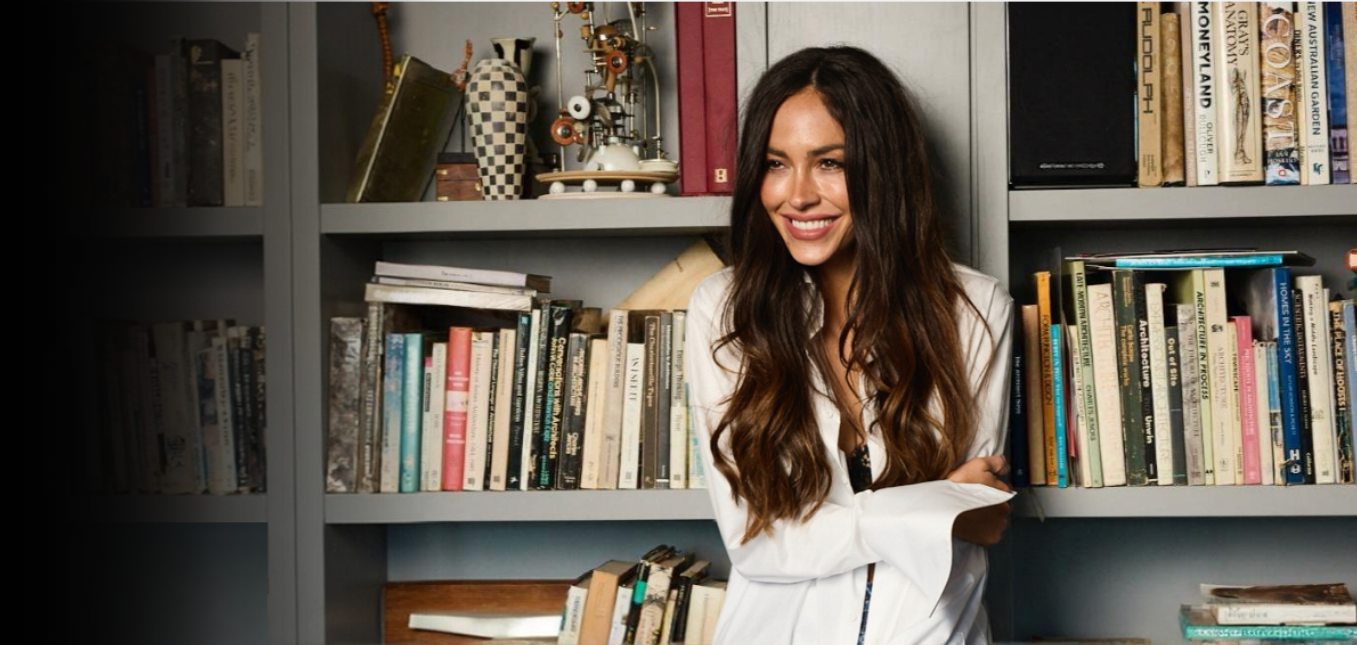
Natalie Kyriacou: How will history judge us?
Delivered at Reclaiming Democracy Together
An edited extract of this piece was published at Sydney Morning Herald, here.
Natalie Kyriacou is the author of Nature’s Last Dance: Tales of Wonder in an Age of Extinction
How do you think we will be written about in history books?
Imagine it is 500 years in the future. How would historians explain what the world was like in 2026? How would they describe the strange rules and systems we organised our lives around?
I’ll start.
We had access to more information than any civilisation in human history and used it chiefly to quarrel with strangers on small glowing rectangles owned by hairless billionaires who’d discovered that human misery, vanity and emotional instability could be monetised
We had robust scientific data unlike any generation before us and we used it to form conspiracy theories, deny climate change, and perfect plastic surgery techniques.
We built an economic system that prospered from oil spills, war, cancer, drug addiction, gambling addiction, mental health crises, and private prisons, but didn’t consider human or environmental health.
We also invented social media, a tool capable of connecting humanity across continents, and it promptly addicted us, surveilled us, radicalised us, destroyed our attention spans, damaged our children psychologically and gave teenagers eating disorders.
We had institutions to govern the world. Often, there would be large conferences where world leaders would gather to solve problems. These events functioned much like a school group project which involved grand objectives, paired with an unspoken understanding that no one was really going to actually do anything.
Every three years, millions of people would gather in school halls to perform a sacred ritual. They would vote between a small number of very similar-looking men who would go on to lead the country. Then, having performed this sacred election ritual, voters would spend the following years ignoring politics entirely while binge-watching reality TV and listening to male podcast hosts discuss protein supplements and whether or not women’s rights was ruining civilisation.
We were the only species that actively debated whether or not we should maintain the environmental conditions necessary for our own continued existence. Ensuring the health of things like atmosphere, forests, oceans, rivers, and wild animals would presumably be an obvious priority for a species that relied entirely on those things to survive; something we could have all agreed on. But no. We couldn’t agree on that.
Environmental debates became so tedious that by the end of it, even the environmentalists were sick of the environment.
Children were starving en masse and though we had the ability to stop that. We chose not to.
A very small number of individuals accumulated more wealth than entire nations, then used it to purchase yachts, media companies, private space programmes, and often, the political system itself.
Humans are unique. Not in the impressive way, like an octopus changing colour, but in the way that a person clipping their toenails on a public bus is unique.
We have split the atom, cracked the genetic code, and hurtled expensive metal objects into space, sometimes with people inside, mostly just to see if we could. We have built cities that scrape the sky, machines that think and a global communications network that allows people to yell at each other at any time of day, from any part of the world.
But when it comes to the question of whether we should keep our own planet habitable, and keep our own people alive, humans remain curiously undecided.
We have turned the simple matter of survival into an endless controversy.
To be clear, these things happen because we allow them to. There is nothing inevitable about the way we run our economies, draft our laws, or govern our societies. These systems have no independent existence; they exist because we will them to. They are human constructs.
These are rules of our own making; rules that we just made up and now follow with devotion.
Unlike the laws of nature, like gravity for example, which applies equally to everyone, human-made systems like economics, law and politics are made up and often structured to the advantage of a small select group of people. This is why gravity applies to everyone, but tax loopholes do not.
And these human constructs normalise the destruction of nature and communities. Human and environmental suffering persist not because we lack alternatives but because we allow them to remain profitable, socially tolerated, and politically viable
But the world doesn’t have to work this way. We made it this way. And that means we can make it work differently. Like all human-made systems, they can be rewritten, assuming, of course, we want to.
So, we need to remake the world.
Frankly, humans cannot be trusted to take on this job. We are simply not qualified. We have demonstrated, with impressive consistency, that we are not especially good at looking after each other or the planet we depend on.
So perhaps it is time we stopped looking exclusively to ourselves for guidance.
With that in mind, here are five things we can learn about fixing the world from things that aren’t human.
These are lessons from nature.
Lesson One: Penguins
During Antarctic winters, emperor penguins form a tight huddle together to keep warm. Every minute, the entire group moves, allowing the penguins on the outer edge of the huddle to move into the warmer, sheltered centre of the huddle. This ensures no individual freezes on the outside of the group.
The lesson here is that survival depends on sharing hardship so no one is left to bear it alone. For example, in penguin society, there is no penguin that charters a private jet to escape to a remote island while everyone else suffers.
Lesson Two: Ravens
Ravens track how others behave and remember who is reliable and who is not. Individuals that cheat, harm, or behave aggressively can be avoided or excluded in future interactions.
The lesson here is that in raven society, persistent cheaters don’t get socially promoted… and they certainly don’t become President.
Lesson Three: Honeybees
When honeybees need a new home, hundreds of scout bees fly out to inspect potential sites. On their return to the hive, each scout communicates the location of the potential new home by performing a waggle dance in front of their hive mates. Over the course of several days, the scouts spend hours dancing, each advocating for a possible location. As the days pass, consensus begins to emerge around the best option for a new home.
The lesson here is that honeybees understand that healthy democracies depend on transparent information sharing, distributed participation, and rewarding the best available evidence. There is no single billionaire bee that controls the information.
Lesson Four: Forests
Forests survive because no single tree can monopolise resources indefinitely without weakening the broader system. Though they can compete for sunlight and space, trees share water and nutrients through underground networks, which they also use to communicate. Trees even send distress signals about drought and disease, and other trees then alter their behavior when they receive these messages, aiding in the survival of neighbouring trees and the forest as a whole.
Importantly, when one species becomes too dominant, ecosystems often become more fragile and prone to pests and disease.
Trees have natural limits to growth. They can only take so much sunlight, water, and space before growth becomes harder, slower, and less efficient.
The lesson here is that healthy forests don’t allow unlimited dominance by a single tree. No system survives unchecked monopolies, not even forests. When too much power sits in one place, or when one part of a system takes too many resources, the whole system becomes weaker. In the forest, there is no such thing as an oligarchy.
Lesson Five: Elephants
African elephants have a matriarchal society where the oldest, most experienced female usually leads the herd with wisdom, empathy, and protective care rather than dominance.
Elephant matriarchs guide the herd using experience, remembering water sources, droughts, and dangers. Elephants care collectively for calves, the injured, and the elderly, and they pass wisdom across generations.
The lesson here is that success lies not in dominance but empathy, wisdom, and protection of others. The other lesson is that perhaps having women lead societies isn’t such a radical idea after all.
The last few years have stripped away the illusion. We have seen, plainly and without disguise, what our systems have become. The mask is off. We see the decay. We see what emerges when power operates without restraint, without accountability, without conscience.
The powers that emerge today – the ones who shield pedophiles, or are pedophiles, and lock up children and bomb hospitals and raze forests and profit off war – they are symptoms of these systems. Systems that we have abided.
The world as we know it is fracturing. In its place, something new is taking shape.
The question is: what will we allow it to become?
Too many of us have become complacent. We have allowed freedoms to be chipped away, bit by bit. We have seen truth distorted. We have watched as the right to protest is eroded, as wealth, information, and power concentrate into fewer and fewer hands.
Too many of us have stood by while others suffered, reassuring ourselves with the most dangerous sentence of them all: ‘At least it is not happening to me.’
Too many of us are living through machines and screens, while the real world, the one that actually holds our bodies, our rivers, our forests, our air, becomes something we pass through rather than belong to.
And somewhere in this process, too many of us have lost part of ourselves: our courage, our empathy, our social intelligence, our connection to nature, to community, to reality.
And in doing so, we have forgotten something very simple. This world is shared. No species survives alone. And the greatest strength of a species is not singularity and dominance; it is diversity and ability to collaborate.
If I could make one request, it would be this: remember your role in this world. You are not a spectator. You are a participant.
The people with courage – so many of my friends and colleagues – are fighting every day, refusing to accept that this is inevitable.
That this is the best we can do.
That this is the world we are handing our children.
They are standing on frontlines, absorbing attacks, risking careers, reputations, and safety, and they are wondering where the hell is everybody?
We need to be more like penguins. We leave noone in the cold.
We need to be more like ravens. We don’t reward bad behaviour.
We need to be more like honeybees. We build collective intelligence
We need to be more like forests. We keep power in check.
We need to be more like elephants. We are guided by empathy.
The future isn’t just shaped through grand, sweeping gestures but in the little moments. The tiny choices we make every day. The small actions that ripple outward.
In the fights we refuse to abandon, in the status quo we refuse to accept. In the moments when we show up for one another, the moments that we choose empathy over apathy, kindness over cruelty, and courage over silence.
The world doesn’t have to be this way. It doesn’t.
We made it this way. We tolerate it. We endorse it.
And now we must unmake it.
NATURE’S LAST DANCE:
Tales of Wonder in an Age of Extinction.
This is nature writing like you’ve never seen before, diving headfirst into a fierce, funny, and provocative journey of power, politics, culture, and what it means to be human on a planet in crisis.
Amidst the tragedy of wild species extinction lies a hidden world of survival and wonder. Conservationists are locked in a high-stakes battle with the ghost of a drug lord and his herd of hippos. Scientists are fighting to save a flightless bird that romances rocks. Unconventional animals are upending 21st-century beauty standards, and financiers are betting on whale poo to make its debut on Wall Street.
This is a story of survival and extinction, of life and death, of curiosity and perversion, of unimaginable joy and harrowing sorrow.
Set against the backdrop of a rapidly unfolding mass extinction event, Nature’s Last Dance takes readers across hunting grounds, through jungles and oceans, inside communities, through courtrooms, and into the heart of battles to survive against all odds.
Award-winning environmentalist Natalie Kyriacou confronts the extinction crisis with courage and curiosity, charting a new course for nature and showing us why it is so worth fighting for.